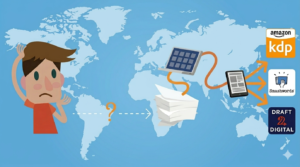
What is the best way to distribute an ebook to multiple platforms? If you are a first-time author, this is likely the biggest question on your mind now that your manuscript is finished. The world of digital publishing is vast, and while having your book on Amazon is a great start, true success often comes from being “wide”—making your book available on Apple Books, Barnes & Noble, Kobo, and even international libraries.
In 2026, the landscape has shifted toward more automated, global options. Let’s break down the two primary ways to get your story into readers’ hands: Going Direct vs. Using Aggregators.
1. Going Direct: The Hands-On Approach
Going “direct” means you create individual accounts on every major retail platform and upload your book files yourself. The primary players here are Amazon KDP, Apple Books, Kobo Writing Life, and Barnes & Noble Press.
Reach
You have total control over where your book appears. However, you are responsible for managing 4–5 different dashboards, tax interviews, and bank connections.
Royalty Rates
This is the biggest draw. By cutting out the middleman, you keep the maximum royalty (usually 70% for ebooks priced between $2.99 and $9.99).
Ease of Use
Low. For a novice, this can be a technical headache. Each platform has its own file requirements and metadata standards. If you want to change your book’s price for a weekend sale, you have to log into every single site to do it manually.
2. Using Aggregators: The “One-Stop Shop”
Aggregators like Draft2Digital (which now includes Smashwords) act as a bridge. You upload your book to them once, and they “distribute” it to dozens of retailers and library systems worldwide.
Reach
Massive. Beyond just the big retailers, aggregators can get your book into OverDrive (libraries), Gardners (international), and niche subscription services like Scribd/Everand.
Royalty Rates
Aggregators usually take a small “success fee”—typically 10% of the retail price. This means you’ll generally net 60% royalties instead of the 70% you’d get going direct.
Ease of Use
High. You have one password and one dashboard. If you update your cover or find a typo, you upload the new file in one place, and it syncs everywhere automatically.
Direct vs. Aggregator: A Quick Comparison
| Feature | Going Direct | Using Aggregators |
| Royalties | Higher (usually 70%) | Lower (usually 60%) |
| Time Spent | High (Multi-platform management) | Low (Single dashboard) |
| Global Reach | Limited to where you sign up | Extensive (Libraries & Global) |
| Complexity | Technical & tedious | Beginner-friendly |
The “Best of Both Worlds” Strategy
Many seasoned indie authors use a hybrid approach: they go direct to Amazon KDP (because Amazon represents the lion’s share of the market) and then use an aggregator for everywhere else. This ensures you get the highest royalties on your biggest sales channel while keeping the rest of your distribution simple.
Want a Hands-Off Professional Approach?
Even with an aggregator, there is still a learning curve involving ePub validation, metadata optimization, and keyword selection. For authors who want to focus on writing their next book rather than wrestling with distribution settings, Sprig Publishing Solutions handles the entire setup.
From manual ePub styling to ensuring your distribution channels are optimized for maximum visibility, Sprig provides a professionally managed approach. We take the guesswork out of royalties and platform requirements, ensuring your book looks perfect on every device, from a Kindle Paper white to an iPad.
Final Thoughts for the Novice Author
Don’t let the technical side of publishing stall your momentum. Whether you choose to manage your own accounts or work with a partner to ensure a professional launch, the most important thing is getting your work out there.
The “best” way is ultimately the one that fits your schedule and your comfort level with technology. Happy publishing!
 George McKeon is a self-publishing expert with three decades of experience at top-tier publishing houses including Random House, HarperCollins, and Macmillan. Today, he shares that expertise with first-time authors, guiding them through the self-publishing process and helping turn their dream of becoming a published author into reality.